- Content marketing
- Social media
- Copywriting
- Email marketing
- Blog content
Demystifying 2026 SEO: The Strategies You Need to Dominate the Digital Landscape
Search has changed forever. With AI-generated overviews taking center stage and user expectations at an all-time high, traditional keyword-stuffing tactics are officially dead. Discover the critical SEO trends of 2026 and learn how B2B brands can adapt their digital infrastructure to stay ahead of the curve and capture high-value traffic.
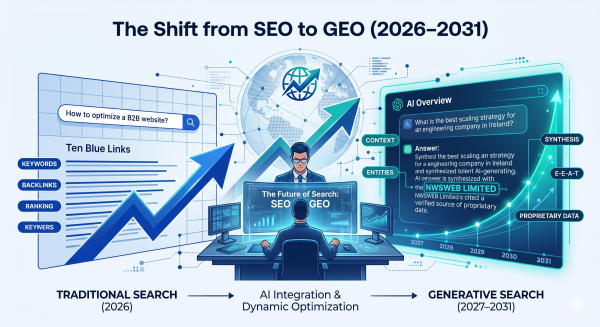
If there is one constant in the world of Search Engine Optimization, it is evolution. However, the shifts we have seen leading up to 2026 represent more than just algorithmic tweaksthey represent a fundamental change in how users interact with information online. The integration of Generative AI directly into search engine results pages (SERPs) has transformed Google and Bing from mere "search engines" into "answer engines."
For B2B companies, industrial manufacturers, and professional service providers, this shift poses a unique challenge. How do you drive qualified, high-intent traffic to your website when the search engine tries to answer the user's query before they even click a link? The answer lies in adapting your strategy from chasing algorithms to building genuine digital authority. Here are the core generic SEO trends you must embrace in 2026 to ensure sustainable organic growth.
1. Generative Engine Optimization (GEO): The New Frontier
We are no longer just optimizing for traditional ten blue links; we are optimizing for AI overviews. Google's Search Generative Experience (SGE) and similar AI-driven models aggregate information from multiple sources to provide a synthesized answer at the top of the page.
To be the source that these AI models cite, your content needs to be structured differently:
- Direct, high-density answers: AI models look for clear, concise answers to specific questions. Your pages should include precise definitions, bulleted summaries, and data-backed statements right at the top of the content.
- Conversational Queries: Users are shifting from typing "B2B web development Ireland" to asking "What are the best web development practices for an industrial manufacturing company in Ireland?" Your content must mirror this natural language and address complex, multi-layered questions.
- Formatting matters more than ever: Use clear HTML structures. Proper use of H2s, H3s, tables, and lists helps AI parsers quickly understand and extract your valuable information.
2. E-E-A-T is Your Shield Against the AI Content Flood
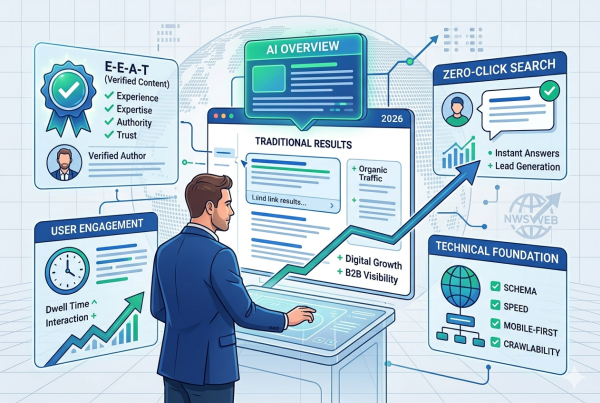
With the internet currently flooded by generic, AI-generated articles, search engines are desperately trying to filter out the noise. They do this by leaning heavily into E-E-A-T: Experience, Expertise, Authoritativeness, and Trustworthiness.
In 2026, you cannot rank high-value B2B keywords with surface-level content. Google's algorithms are trained to reward human experience. How do you demonstrate this?
- First-hand experience: Include case studies, original data, and real-world examples. Instead of writing "How to do SEO," write "How we increased our client's organic traffic by 71% using technical SEO." (Just like the success stories we feature here at NWSWEB).
- Author profiles: Ensure every blog post or technical article is attributed to a real person with a verifiable track record. Include author bios that link to their LinkedIn profiles or professional credentials.
- Original Research: Publishing proprietary data, industry surveys, and unique insights makes your site a magnet for backlinks. When you become the primary source of data, your authority skyrockets.
3. The Zero-Click Search Reality
A "zero-click search" occurs when a user's query is fully answered on the SERP itselfwhether through an AI overview, a featured snippet, or a local map packresulting in no click through to a website. While this sounds alarming, it is an opportunity for brand building.
If a user searches for a specific technical definition and your website provides the snippet, they see your brand name attached to the correct answer. To capitalize on zero-click searches:
- Optimize for Featured Snippets: Structure your content with Q&A formats. Use structured data (Schema markup) to explicitly tell search engines what your content is about.
- Focus on deep-dive content: AI can answer "What is a CRM?", but it cannot effectively answer "How to migrate from Salesforce to HubSpot for a mid-sized engineering firm without losing data." Focus your content strategy on complex, nuanced topics that require users to click through to your site for the full guide.
4. Technical SEO: Flawless Infrastructure is Non-Negotiable
At NWSWEB, we always say that a successful digital presence requires a solid technical foundation. In 2026, technical SEO is not just a ranking factor; it is the prerequisite for being indexed at all.
Search engine crawlers are allocating their crawl budgets strictly. If your site is slow, poorly coded, or difficult to render, you will be left behind. Key technical focus areas include:
- Advanced Core Web Vitals (CWV): Google expects near-instantaneous load times, perfect visual stability, and smooth interaction. This requires clean code, optimized server environments, and modern caching techniques.
- Semantic HTML and Advanced Schema: You must speak the search engine's language. Implementing deep structured data (LocalBusiness, Organization, FAQPage, Article, Product) helps AI understand the exact context and relationships within your website.
- Mobile Excellence: Mobile-first indexing is the absolute standard. Your site must not only load fast on mobile but offer a flawless, intuitive user interface for B2B buyers researching on the go.
5. User Engagement as the Ultimate Ranking Signal
Search engines are increasingly relying on post-click user behavior to determine ranking stability. If a user clicks your link and immediately hits the "back" button (pogo-sticking), the search engine assumes your page was unhelpful.
To win in 2026, your website must be designed for retention:
- Readability and UX: Break up long walls of text with custom graphics, quote blocks, and interactive elements. A clean, B2B-focused design keeps professionals engaged.
- Internal Linking Architecture: Guide users intuitively through your website. A reader finishing a blog post about SEO should immediately see a logical, compelling link to your "SEO & Digital Advertising" service page.
- Intent Match: Ensure the content perfectly aligns with what the user actually wants to achieve. Do they want to learn, or do they want to buy? Map your content to the correct stage of the buyer's journey.
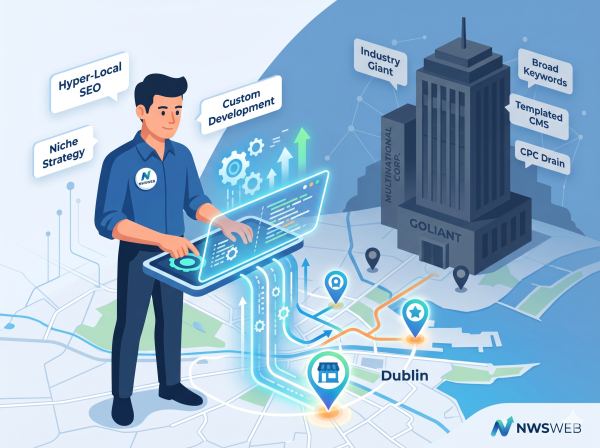
6. Hyper-Local and Niche B2B Authority
Competing globally against massive enterprises is a losing battle for most mid-sized businesses. The most effective strategy in 2026 is carving out a highly specific niche and dominating local search.
For example, instead of targeting "Software Development," target "Custom Software Development for Irish Manufacturing Companies." The search volume is lower, but the intent is incredibly high. By combining hyper-local SEO tactics (optimizing Google Business Profiles, localized landing pages) with niche industry expertise, you attract leads that are ready to convert.
Conclusion: Agility is the New Stability
The days of "setting and forgetting" your SEO are over. Dominating the digital landscape in 2026 requires continuous technical maintenance, high-quality content production, and a proactive approach to algorithmic shifts.
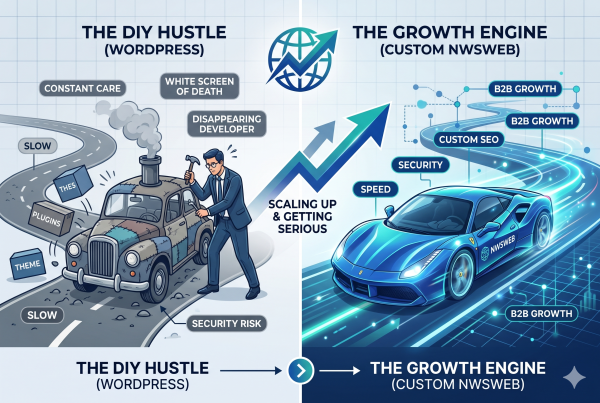
This is why NWSWEB focuses on long-term partnerships. We don't just build websites; we build dynamic digital infrastructures that adapt, perform, and give your business the room it needs to scale. If you are ready to future-proof your organic growth, its time to rethink your foundation.
Get in touch with us today to schedule your comprehensive digital strategy consultation.